As organizations continue to accelerate digital transformation, software development teams face increasing pressure to deliver applications faster while maintaining strong security standards. Traditional security approaches often treat security as a separate phase that occurs after development, creating delays, vulnerabilities, and compliance challenges.
This is where DevSecOps comes in. DevSecOps integrates security into every stage of the software development lifecycle, ensuring that applications are secure from the start rather than being tested and fixed at the end. By embedding security practices into development and operations workflows, organizations can reduce risks, improve compliance, and deliver secure software at speed.
Whether you’re a startup, enterprise, or growing business, understanding DevSecOps can help you build more resilient applications while supporting agile development practices.
What Is DevSecOps?
DevSecOps, short for Development, Security, and Operations, is a software development approach that integrates security throughout the entire development lifecycle. Instead of treating security as a separate function, DevSecOps makes security a shared responsibility among developers, security teams, and operations professionals.
The primary goal of DevSecOps is to identify and address vulnerabilities as early as possible through automation, continuous monitoring, and secure development practices.
In a DevSecOps environment, security checks are integrated directly into CI/CD pipelines, allowing teams to detect and resolve issues before they reach production. This approach supports faster development cycles while maintaining strong security standards.
DevOps vs DevSecOps
One of the most common questions organizations ask is: “What is the difference between DevOps and DevSecOps?”
DevOps focuses on improving collaboration between development and operations teams to accelerate software delivery. While security remains important, it is often handled separately.
DevSecOps expands upon DevOps by embedding security into every stage of development. Security testing, vulnerability scanning, compliance checks, and risk assessments become continuous processes rather than isolated activities.
Key differences include:
- Security integrated throughout development
- Automated security testing
- Continuous compliance monitoring
- Shared security responsibility
- Faster vulnerability detection and remediation
Organizations adopting DevSecOps gain greater visibility into security risks while maintaining development speed.
Why Is DevSecOps Important?
Cybersecurity threats continue to evolve, and software vulnerabilities can have significant financial and reputational consequences. Traditional security approaches often identify issues too late in the development process, making remediation costly and time-consuming.
DevSecOps addresses these challenges by shifting security left, a strategy that incorporates security measures earlier in the development lifecycle.
Benefits of this approach include:
- Reduced security vulnerabilities
- Faster software releases
- Improved compliance management
- Lower remediation costs
- Enhanced collaboration across teams
- Better risk management
As organizations in the US, UK, and UAE increasingly prioritize cybersecurity and regulatory compliance, DevSecOps has become a critical component of modern software development strategies.
Key Benefits of DevSecOps
1. Improved Security Posture
One of the primary DevSecOps benefits is enhanced security throughout the application lifecycle. Automated security testing helps identify vulnerabilities before deployment, reducing exposure to cyber threats.
2. Faster Software Delivery
By integrating security into CI/CD pipelines, teams can automate testing and compliance checks without slowing development. This enables organizations to deliver software updates more efficiently.
3. Reduced Costs
Fixing vulnerabilities during development is significantly less expensive than addressing them after deployment. DevSecOps helps organizations reduce remediation costs and avoid costly security incidents.
4. Enhanced Compliance
Many industries must comply with strict regulations and security frameworks. DevSecOps automation tools help maintain compliance by continuously monitoring systems and generating audit-ready reports.
5. Better Collaboration
DevSecOps fosters a culture of shared responsibility. Developers, security professionals, and operations teams work together to identify and mitigate risks, resulting in stronger security outcomes.
6. Continuous Risk Management
Continuous monitoring enables organizations to identify emerging threats and vulnerabilities in real time, reducing the likelihood of successful cyberattacks.
How Does DevSecOps Work?
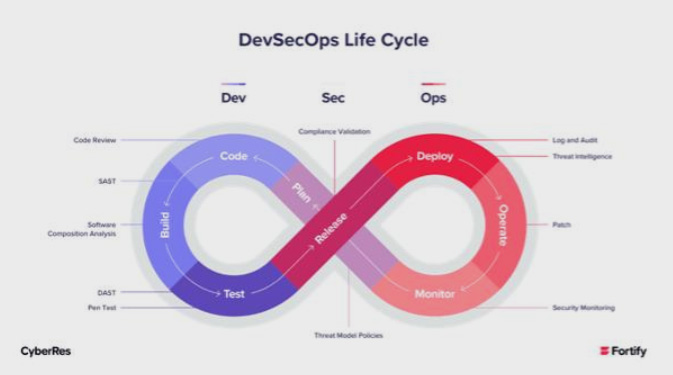
DevSecOps incorporates security controls throughout the software development lifecycle.
Planning Phase
Security requirements are defined during project planning. Teams identify compliance obligations, security objectives, and potential risks.
Development Phase
Developers follow secure coding practices and use tools that detect vulnerabilities during code creation.
Build Phase
Automated security scanning tools evaluate source code and dependencies for known vulnerabilities.
Testing Phase
Security testing includes static application security testing (SAST), dynamic application security testing (DAST), penetration testing, and vulnerability assessments.
Deployment Phase
Infrastructure configurations are validated, and security policies are enforced before applications are released.
Monitoring Phase
Continuous monitoring identifies suspicious activity, vulnerabilities, and compliance violations after deployment.
Top DevSecOps Tools
Selecting the right DevSecOps tools is essential for successful implementation.
GitHub Advanced Security
Provides code scanning, secret detection, and dependency management features that help developers identify vulnerabilities early.
SonarQube
A widely used static code analysis platform that detects security vulnerabilities and code quality issues.
Snyk
Helps organizations identify and remediate vulnerabilities in open-source dependencies and container images.
Checkmarx
Offers comprehensive application security testing solutions for secure software development.
Aqua Security
Provides container and cloud-native application security solutions for DevSecOps environments.
HashiCorp Vault
Helps organizations securely manage secrets, credentials, and encryption keys.
Jenkins
A popular CI/CD automation tool that integrates security testing into deployment pipelines.
DevSecOps Best Practices
Organizations looking to implement DevSecOps should follow proven strategies to maximize effectiveness.
Shift Security Left
Integrate security as early as possible in the development process to identify vulnerabilities before they become costly problems.
Automate Security Testing
Implement automated scans and testing throughout the CI/CD pipeline to improve consistency and efficiency.
Promote Security Awareness
Train development teams on secure coding practices and common security risks.
Implement Continuous Monitoring
Monitor applications, infrastructure, and user activity to detect threats in real time.
Secure Open-Source Dependencies
Regularly review third-party libraries and dependencies for known vulnerabilities.
Establish Clear Security Policies
Create documented security standards and ensure all teams understand compliance requirements.
Leverage Infrastructure as Code Security
Validate infrastructure configurations before deployment to prevent misconfigurations.
Common Challenges in DevSecOps Implementation
Despite its benefits, organizations may encounter challenges when adopting DevSecOps.
Common obstacles include:
- Resistance to cultural change
- Lack of security expertise
- Complex tool integration
- Compliance requirements
- Limited automation capabilities
Successfully overcoming these challenges requires executive support, ongoing training, and a commitment to continuous improvement.
The Future of DevSecOps
As cyber threats become more sophisticated, DevSecOps will continue to evolve. Artificial intelligence, machine learning, and advanced automation technologies are helping organizations improve threat detection and response capabilities.
Cloud-native architectures, containerization, and microservices are also driving demand for more advanced DevSecOps automation tools and security frameworks.
Organizations that embrace DevSecOps today will be better positioned to manage future security challenges while maintaining development agility.
Conclusion
DevSecOps is no longer optional for organizations seeking to deliver secure software in today’s rapidly evolving digital landscape. By integrating security into every phase of development, businesses can reduce vulnerabilities, accelerate software delivery, improve compliance, and strengthen overall security posture.
Whether you’re implementing security in a CI/CD pipeline, adopting shift-left security practices, or exploring new DevSecOps tools, the key is to make security a continuous and collaborative process. Organizations that successfully implement DevSecOps gain a competitive advantage through faster innovation, stronger security, and greater customer trust.
Frequently Asked Questions
What is DevSecOps?
DevSecOps is a software development approach that integrates security practices into every stage of the development lifecycle, making security a shared responsibility among development, security, and operations teams.
What are the main benefits of DevSecOps?
The primary benefits include improved security, faster software delivery, reduced remediation costs, better compliance, enhanced collaboration, and continuous risk management.
How do you implement DevSecOps?
Organizations implement DevSecOps by integrating automated security testing, continuous monitoring, secure coding practices, and compliance checks into CI/CD pipelines.
What is the difference between DevOps and DevSecOps?
DevOps focuses on collaboration between development and operations, while DevSecOps incorporates security into every stage of software development.
What are the most popular DevSecOps tools?
Popular DevSecOps tools include GitHub Advanced Security, SonarQube, Snyk, Checkmarx, Aqua Security, HashiCorp Vault, and Jenkins.